


Eco-Friendly Wetsuits for Women: Limestone Neoprene vs Traditional Neoprene
"As women who deeply love the ocean, it is our inherent responsibility to protect it," says Amanda Elizabeth, founder of BOLDE. "The transition from traditional to eco-friendly wetsuits isn't just a trend; it is a critical evolution in water sports."
When searching for the best eco-friendly wetsuits for women, understanding the materials that make up your gear is paramount. For decades, the industry standard relied heavily on traditional, petroleum-based neoprene. However, modern innovations have introduced a far superior and sustainable alternative: limestone neoprene.
The Environmental Impact of Traditional Neoprene
To truly appreciate sustainable diving gear, we must first understand the environmental impact of traditional petroleum-based neoprene wetsuits. The production of standard neoprene involves extracting fossil fuels and using highly toxic chemicals. These manufacturing processes emit substantial greenhouse gases, which are a primary contributor to global climate change. Furthermore, the toxic waste generated during production often pollutes vital waterways, causing severe harm to marine wildlife.
Perhaps the most alarming fact for environmentally conscious divers is that petroleum-based neoprene is not biodegradable. When a traditional wetsuit reaches the end of its lifespan, it can sit in a landfill for hundreds of years, remaining largely unchanged and contributing to long-term waste.
The Rise of Limestone Neoprene: A Sustainable Solution
In stark contrast, limestone is a natural mineral that is abundant in the earth's crust and can be quarried in a sustainable manner. This material is processed into a synthetic rubber that offers incredible benefits for both the environment and the wearer.
According to Amanda Elizabeth, "For BOLDE, limestone neoprene was the obvious choice. Our goal was to create a wetsuit that aligns with our customers' values without sacrificing comfort, warmth, flexibility or performance.”
The environmental benefits cannot be ignored. Industry estimates suggest that limestone-based neoprene may produce around 30% lower CO2 emissions than conventional petroleum-based neoprene. Additionally, the processing of this natural mineral may involve fewer petrochemical inputs and lower emissions, making it a lower-impact alternative in many lifecycle comparisons. To help further reduce its environmental impact, much of the energy used in the production of limestone neoprene is sourced from renewable energy sources such as hydroelectricity.
Performance Benefits: Why Limestone Neoprene Wetsuit is Superior for Women
Beyond its eco-friendly footprint, limestone neoprene offers exceptional warmth and flexibility, making it a superior choice for diving and snorkelling. Unlike traditional options, it features a tightly packed, independent closed-cell structure. This unique cellular makeup distributes stress and pressure evenly across the material, preventing tearing and maximising the life of your suit.
For those with sensitive skin, limestone neoprene can be a game changer. Unlike traditional petroleum-based neoprene, which may contain residual chemicals and compounds that can contribute to skin irritation in some individuals, limestone neoprene is often considered a gentler alternative. Many find it softer against the skin, making it more comfortable to wear for extended periods in the water.
The BOLDE Advantage in Sustainable Diving
Finding the perfect women’s wetsuit involves balancing fit, function, and footprint. Women's bodies require specific tailoring – narrower waists, wider hips, and contoured chest panels—to ensure maximum thermal insulation and mobility. BOLDE wetsuits are meticulously engineered using premium, eco-friendly limestone neoprene, guaranteeing a flawless, second-skin fit that helps retain heat effectively when properly fitted.
By choosing an eco-friendly limestone wetsuit, you are investing in a product that lasts longer, is more comfortable on your skin, and honours the ocean you love to explore.
[Shop BOLDE’s Eco-Friendly Wetsuits]
Frequently Asked Questions (FAQ)
-
What is the most eco-friendly wetsuit material?
Limestone neoprene (Yamamoto) is widely regarded as one of the leading eco-friendly alternatives to traditional petroleum-based neoprene due to its lower environmental impact and durability. -
Are limestone neoprene wetsuits better than traditional neoprene?
Limestone neoprene wetsuits can provide comparable or superior warmth, flexibility, durability, and comfort while offering potential environmental advantages. -
What should women look for in an eco-friendly wetsuit?
The best eco-friendly wetsuits combine sustainable materials with exceptional fit, warmth, flexibility, durability and all-day comfort. -
Why are limestone neoprene wetsuits becoming more popular?
Growing environmental awareness, improved performance, and increasing demand for sustainable water sports equipment are driving the adoption of limestone neoprene wetsuits worldwide.
Key Takeaways
- Limestone neoprene wetsuits offer a more eco-friendly alternative to traditional petroleum-based neoprene.
- They provide excellent warmth, flexibility, durability, and comfort for diving, snorkelling, and other water sports.
- Eco-friendly wetsuits for women can help reduce environmental impact without sacrificing performance.
- Investing in a well-fitted limestone neoprene wetsuit offers both environmental benefits and long-term value.
- BOLDE’s sustainable wetsuits are crafted to deliver premium performance while embracing a more considered approach to material selection.
Read more
The ultimate wetsuit care guide
A high-quality wetsuit should be durable, but there are a few things that we can do to get the most out of our wetsuits. Like with most things in life, a little bit of TLC will go a long way. Her...
Read more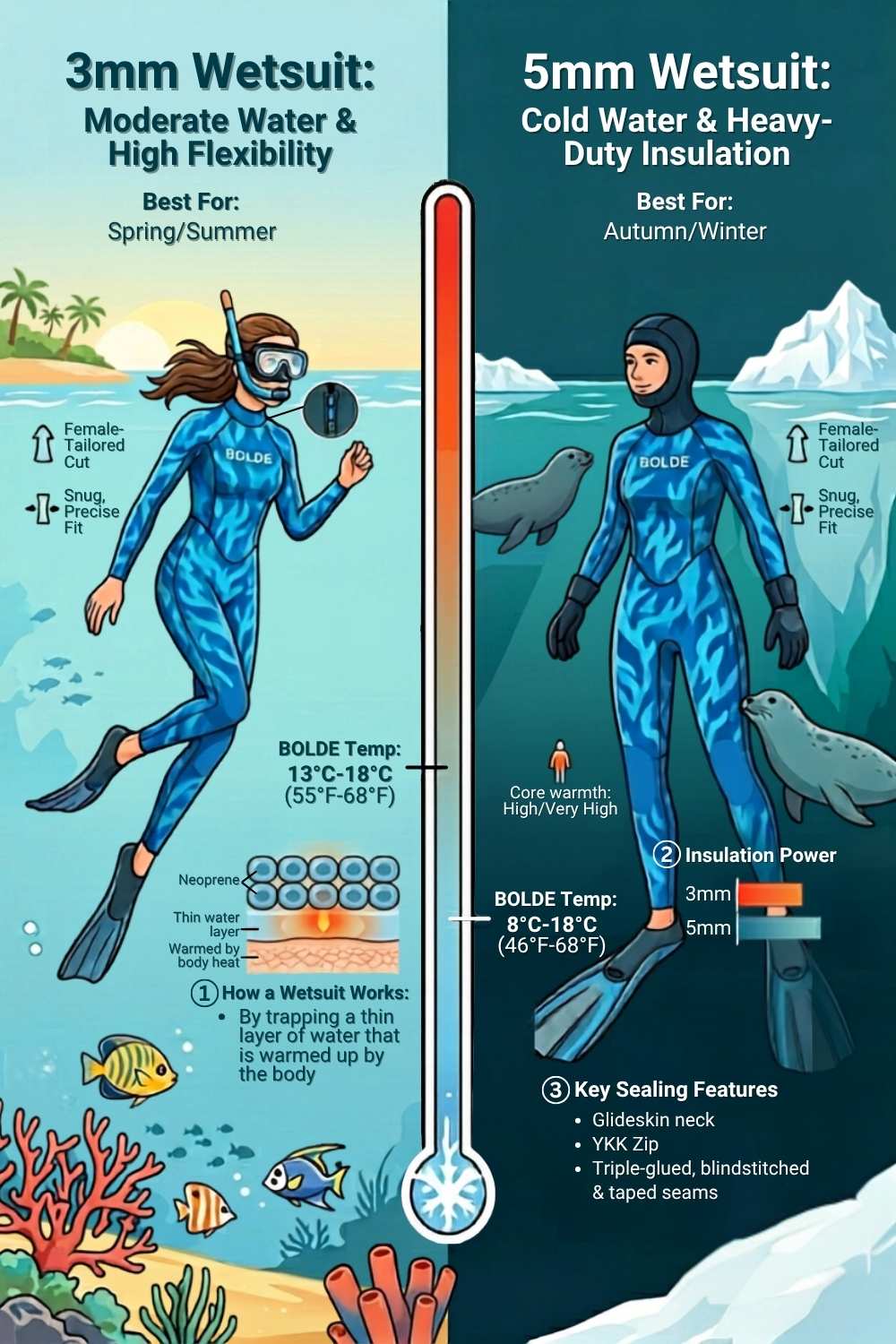
3mm vs 5mm Wetsuit: Choosing the Right Thickness for Different Water Temperatures
"Choosing the right wetsuit thickness is the most critical decision a water woman can make," explains Amanda Elizabeth, founder of BOLDE. "It is the delicate balance between maintaining your core b...
Read more